My number one concern about using Nikon's best heavy primes and zooms has always been how much mobility I would lose while shooting in different conditions and terrains. The Nikon 300mm f/2.8 or 200-400mm f/4 that I have used extensively require a very good and heavy CF tripod and matching head to stabilize their bulk and weight which impacts mobility and portability even more. Yes one can shoot these lenses hand held. I've done it often. It's not fun. Shooting with them hand held without moving too much is one thing (at a sports venue for example), lugging them around in dense woodland over long distances for extended periods of time is a recipe for body aches and frustration. Add hot weather to the mix and the exercise becomes even more uncomfortable.
Enter the 300mm PF. It weighs 755 grams. That's four times less than the 300mm f/2.8 !!! It's about half as long. I don't need a tripod to use it at all. If a subject requires surgical precision framing I could bring along a light CF or cheap aluminum tripod. I can carry the lens on a D500 or full frame camera while holding it in my hands ready to shoot at all times without ever feeling fatigued or weighed down. Being able to react and move quickly in any direction and in tight spaces means getting shots that a bulky and heavy lens would simply not allow. The implications of this advantage in mobility can't be overstated. Add a Nikon TC-14E III to the lens and you have a very usable 420mm of reach at f/5.6 on full frame or a very respectable 630mm on DX.
This lens with TC attached to the camera fits into a super compact and light backpack that I affectionately call the lunchbox. It even has room for more glass such as a small macro, wide or portrait lens. The subject of camera and lens bag or pack is not often brought up but this too can make a big impact on how comfortable or uncomfortable a camera and lens combination can become when traveling. The camera bag I used to have to haul the 200-400mm f/4 weighed three times more than the Lowepro Traveler 150 I use with the 300mm PF.
The Lowepro Traveler 150. Minimalistic design but extremely practical.
Interior of backpack with 300mm PF lens and TC-14 III attached to a D500. There's even extra room for a compact lens.
Ok so the Nikon 300mm PF is really light but what about performance and overall image quality ?
Before owning the Nikon 300mm F/4 PF lens, I have often used a Nikon 300mm f/2.8 or Nikon 200-400mm f/4 lens. Until recently I was under the impression that to get high quality results, one had to use a Nikon premium heavyweight lens to shoot small critters and birds. By premium lens I am talking about lenses you probably already know about, own yourself or dream about owning. These include the 200mm f/2, 300mm f/2.8, 200-400mm f/4, 400mm f/2.8, 500mm f/4, 600mm f/4, 800mm f/5.6 and the newest 180-400 f/4 and 120-300 f/2.8. Lenses that perform superbly but have prohibitive prices and are uncomfortably heavy to haul around on long hikes.
Nikon's 300mm PF lens has completely changed my mind on the matter. It's a game changer ! At least for me it is. It is not only super light and small (Am I repeating myself ?) but its performance so far has been stellar. At center frame it is every bit as sharp as the 300mm f/2.8 with both lenses used wide open. Not only can I see this in my photographs but I have tested it on my lens align target to prove it. It is definitely sharper than the 200-400mm when that lens is used at 400mm f/4. It has a tad less micro contrast than the 300mm f/2.8, slightly less saturated colors and the bokeh is not quite as smooth. It is close, very close in optical performance overall. For a lens that costs three times less than the f/2.8 version, this is fantastic. VR works great and AF is very fast.
In certain circumstances and depending on subject and available lighting the loss of one stop of light (two when you use the 1.4 TC III), means that ISO value will have to be raised to get sufficient shutter speeds compared to using a fast f/2.8 lens. On modern cameras with advanced noise reduction, this is rarely an issue. More importantly, subject isolation does suffer somewhat when shooting subjects at f/4 or f/5.6 compared to f/2.8 especially on a crop camera. With proper framing this drawback can be mitigated mainly by keeping a good distance between subject and background plane.
In conclusion I would say that even though the 300mm PF can't quite equal the optical perfection achieved by the bigger, heavier, faster Nikon lenses, it comes surprisingly close (I am repeating myself again). The numerous advantages that I have mentioned here far outweigh the few drawbacks. For me the total freedom of movement it provides coupled with its excellent optical rendition make it an excellent choice for someone who wants to travel light and have decent reach but does not want to compromise too much on optical output. Nikon has come up with a technical marvel, nothing less.
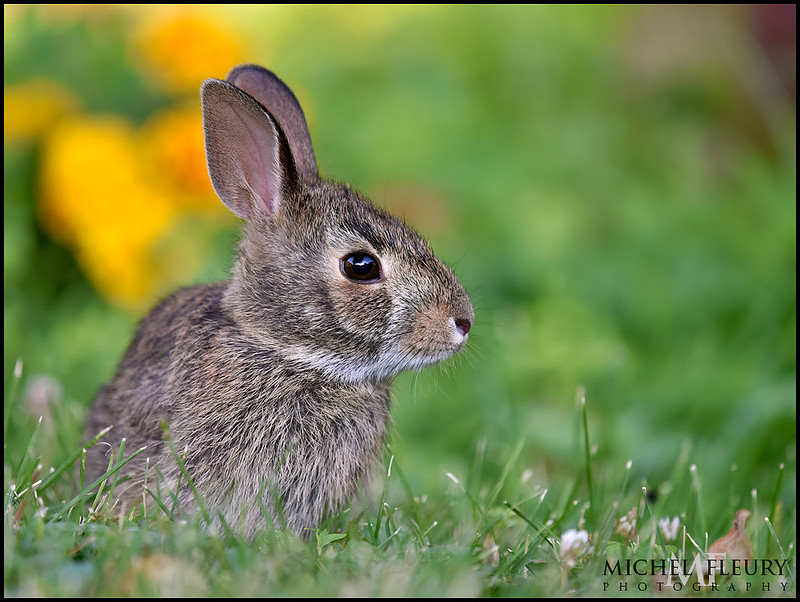
Little ArnoldThis beautiful juvenile hare made our backyard his domain and our garden yellow beans his daily meal.
Photo above taken with the D810 and 300mm PF at 1/200 F/4.0 ISO 320
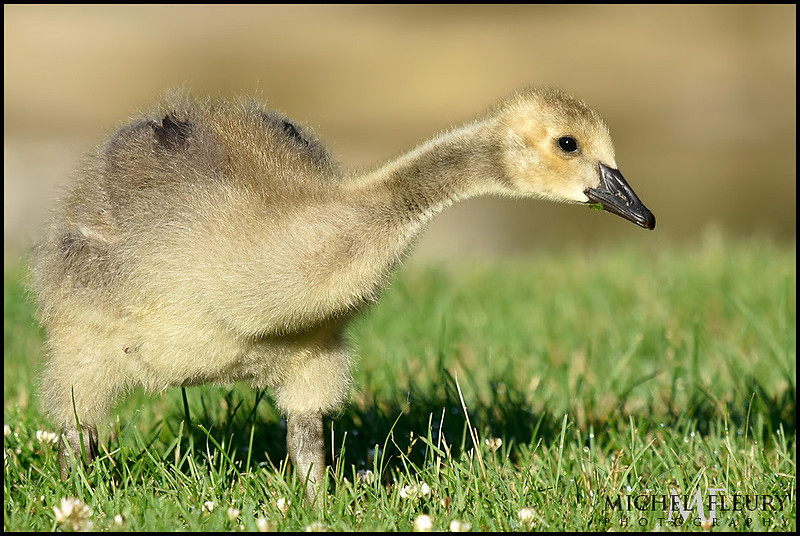
juvenile Canada goose
Photo above taken with the D7200 and 300mm PF at 1/2000 F/4.5 ISO 400
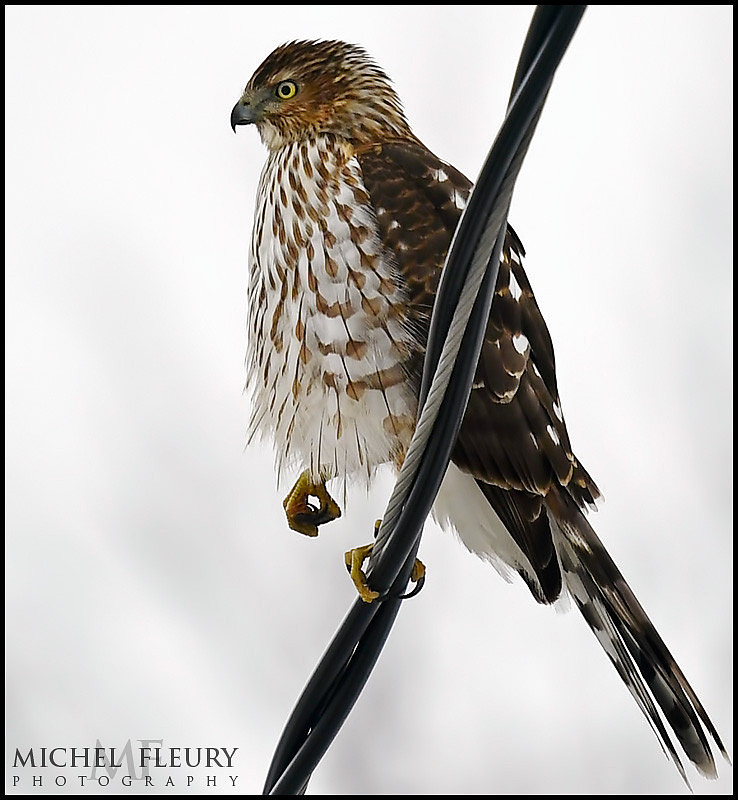
Cooper's Hawk (juvenile)Hunting for sparrows around my bird feeder.
Photo above taken with the D500 and 300mm PF at 1/3200 F/4.0 ISO 320
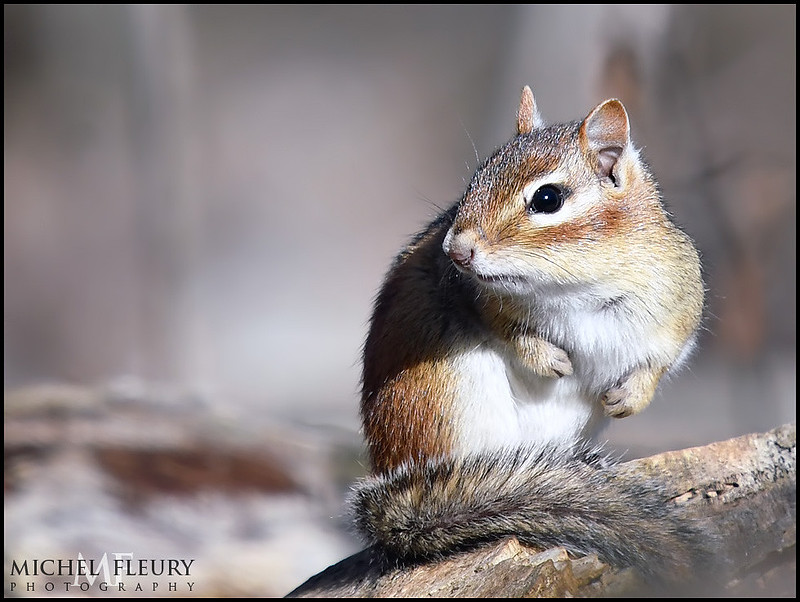
chipmunk
Photo above taken with the D500 and 300mm PF + TC-14 III at 1/1000 F/5.6 ISO 400